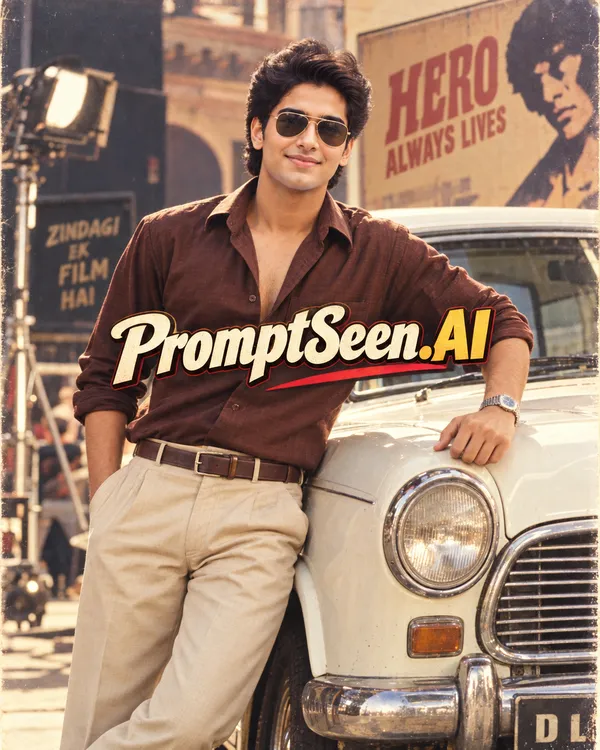
Think feathered hair, aviator sunglasses and a vintage car parked just behind you. This 80s Bollywood prompt turns a plain selfie into a hero shot from the golden years of Hindi cinema, complete with warm cinematic lighting and 35mm film grain.
It works best with a front-facing photo where your face is clearly visible, so the result looks like you and not a random actor.
Use the provided reference photo as the primary identity reference. Create a highly realistic cinematic portrait of the same person transformed into an authentic 1980s Bollywood hero. Preserve the person’s exact facial identity, face shape, natural skin texture, eyes, nose, lips, jawline, and overall facial features without changing or beautifying the face.
Give the person a classic 1980s Bollywood hero hairstyle with naturally voluminous, slightly feathered hair, a stylish vintage shirt with an open collar, classic aviator sunglasses, and a confident charismatic hero expression. Place him beside a classic vintage Indian car from the 1980s, with a nostalgic Bollywood film-set atmosphere.
Use warm cinematic lighting, subtle analog film grain, realistic shadows, slightly soft vintage color tones, authentic 35mm film photography aesthetics, dramatic composition, natural skin tones, realistic fabric and hair details, shallow depth of field, and a stylish old-school Bollywood movie-poster feeling.
The final image should look like a real photograph captured during the golden era of 1980s Bollywood, not a modern digital recreation. Keep the person’s identity unmistakably recognizable from the provided photo, with realistic proportions and natural facial details.
2. 80s Bollywood Heroine Style
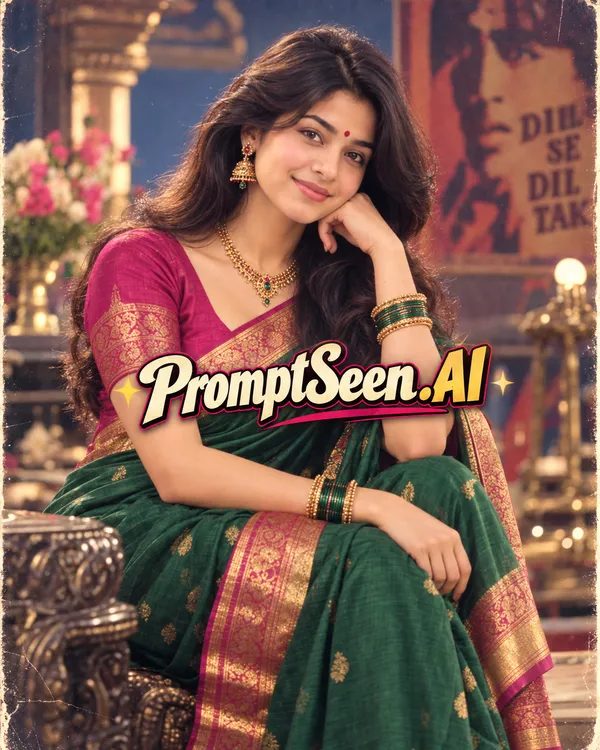
An emerald green saree, a magenta blouse, antique gold jhumkas and a deep red bindi. This 80s Bollywood photo prompt is built around the small details that made the leading ladies of that decade unforgettable.
Use a clear photo with your hair visible; the AI restyles it into soft feathered volume without touching your face.
Use the provided reference photo as the primary identity reference. Transform the same person into a glamorous 1980s Bollywood heroine, while preserving her exact facial identity, natural face shape, eyes, nose, lips, jawline, skin texture, and recognizable facial features. Do not alter, replace, or significantly beautify her face.
Give her an authentic 1980s Bollywood hairstyle with voluminous, softly feathered hair and classic retro styling. Dress her in a stunning emerald green vintage saree with a rich magenta pink blouse and an elegant golden border. The saree should have realistic silk fabric texture and graceful natural folds.
Complete the look with traditional antique-gold jewelry, including elegant golden jhumka earrings, a classic gold necklace, bangles combining emerald green and gold, and subtle jewelry accents featuring small red and green gemstones. Add a deep red bindi for an authentic 1980s Indian cinema look.
Create a glamorous Bollywood studio-film atmosphere with warm professional studio lighting, soft highlights, gentle shadows, subtle 35mm film grain, realistic skin tones, cinematic depth of field, and nostalgic analog-film texture. Use a colorful vintage studio backdrop inspired by classic 1980s Hindi cinema.
Her expression should be graceful, confident, and expressive, with naturally captivating eyes and an elegant classic Bollywood heroine pose. Make the hairstyle, saree, jewelry, makeup, lighting, and overall styling feel authentically 1980s Bollywood.
The final image should look like a real photograph from a classic 1980s Bollywood film, not a modern digital recreation. Maintain realistic anatomy, natural facial proportions, detailed hair and fabric texture, authentic jewelry reflections, and ensure the person remains clearly recognizable from the provided reference photo.
3. 80s Indian Wedding Style
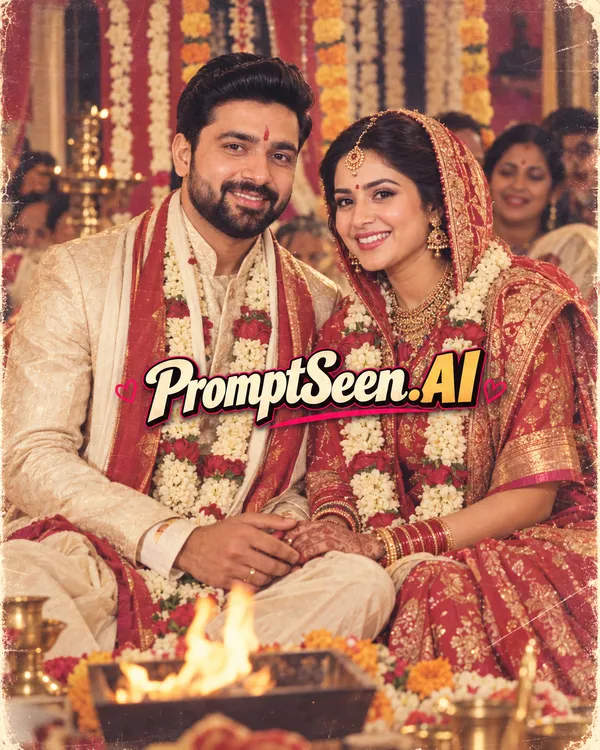
Marigold garlands, brass lamps, handcrafted jewellery and a simple mandap. Weddings in the 1980s had a warmth that modern décor rarely matches, and this 80s Indian photo prompt rebuilds that ceremony around you with period clothing and golden film lighting.
It is a lovely way to gift parents a picture that looks like it came from their own wedding album.
Use the provided reference photo as the primary identity reference. Create a highly realistic 1980s Indian wedding photograph featuring the same person, while preserving their exact facial identity, natural face shape, eyes, nose, lips, jawline, skin texture, and recognizable facial features. Do not change or replace the face.
Dress the person in authentic 1980s traditional Indian wedding clothing, with period-appropriate styling, classic fabrics, traditional embroidery, and elegant vintage accessories. Add authentic traditional jewelry with a slightly old-fashioned handcrafted appearance.
Set the scene at a beautiful 1980s Indian wedding ceremony, featuring marigold and jasmine flower decorations, traditional floral garlands, brass lamps, simple decorative fabrics, wedding mandap elements, and a warm family-celebration atmosphere. Avoid modern wedding decorations, LED lighting, contemporary furniture, or modern photography equipment.
Use warm golden studio-film lighting, soft highlights, natural shadows, realistic skin tones, subtle 35mm analog film grain, gentle film softness, slight vintage color rendering, and authentic period photography characteristics. Capture a candid yet beautifully composed wedding moment with natural expressions and realistic body proportions.
The overall image should feel like a genuine family wedding photograph captured in India during the 1980s, with authentic clothing, decorations, hairstyles, jewelry, and atmosphere. Keep the person highly recognizable from the provided reference photo and maintain realistic facial details, natural skin texture, realistic fabric, flowers, jewelry reflections, and photographic imperfections.
4. 80s College Student Style
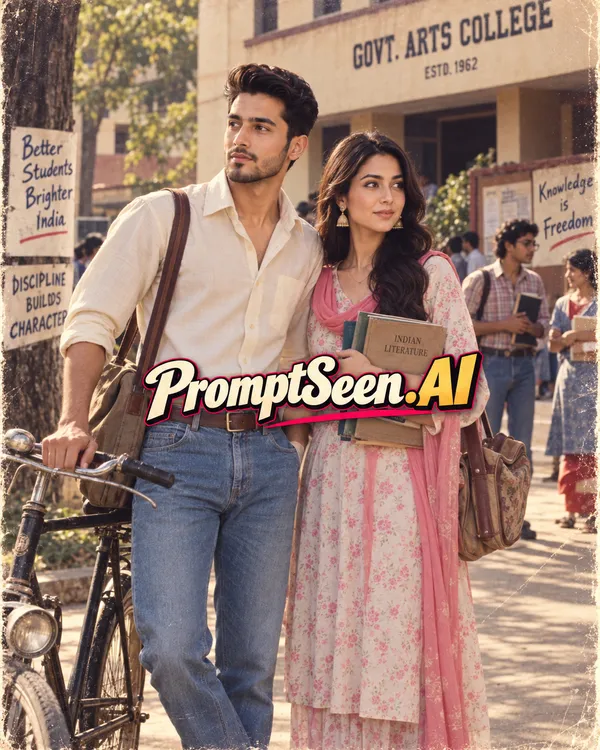
Cream cotton shirt, high-waisted jeans, a canvas shoulder bag and a bicycle by the notice board. This prompt drops you onto an Indian college campus with Kodak-warm colours and a candid, slightly faded finish.
Casual photos tend to work better than formal portraits here.
Use the provided reference photo as the primary identity reference. Transform the same person into an authentic 1980s Indian college student, while preserving their exact facial identity, natural face shape, eyes, nose, lips, jawline, skin texture, hairstyle-compatible facial details, and recognizable features. Do not alter or replace the face.
Dress the person in simple, authentic 1980s college clothing: a neatly tucked light cream or pale blue cotton shirt, classic high-waisted straight-fit blue jeans, simple vintage belt, and traditional canvas or leather shoulder bag. Keep the outfit modest, practical, and period-authentic rather than fashionable in a modern way.
Place the person on a nostalgic 1980s Indian college campus, standing naturally beside a classic vintage bicycle, with old-style college buildings, trees, notice boards, classroom corridors, and a few students in the background wearing period-appropriate clothing.
Use a natural candid pose and a relaxed, youthful college-student expression. Create the photograph with Kodak-style warm film colors, soft natural daylight, subtle 35mm film grain, gentle contrast, slightly faded analog colors, realistic skin tones, mild film softness, and authentic vintage photographic imperfections.
Avoid smartphones, modern backpacks, modern cars, contemporary architecture, LED lighting, modern fashion, or digital-looking effects.
The final image should look like a genuine Kodak photograph taken at an Indian college during the 1980s, with realistic proportions, natural facial details, authentic clothing, believable campus surroundings, and unmistakable retro atmosphere. Keep the person clearly recognizable from the provided reference photo.
5. 80s Indian Family Album – Exact People
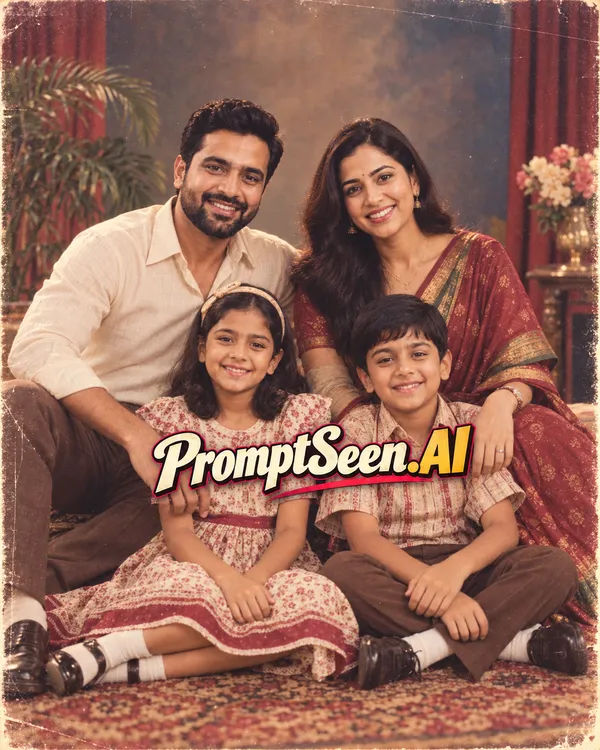
Group photos are where most AI tools slip up: an extra cousin appears, a child disappears, two faces get swapped. This 80s family photo prompt is written with a strict people-count rule, so the AI keeps exactly the people in your reference photo, in roughly the same positions.
The setting is a classic photo studio with a vintage sofa and patterned curtains, in maroon, mustard and bottle-green tones.
Use the provided reference photo as the exact composition and identity reference. Recreate the photograph in an authentic 1980s Indian family-album style while keeping exactly the same number of people visible in the reference photo.
CRITICAL PEOPLE COUNT RULE: Do not add, remove, duplicate, replace, or merge any person. If the reference photo contains 2 people, show exactly 2 people. If it contains 4 people, show exactly 4 people. Every person must correspond to a person already present in the reference photo. Do not invent any additional family members, children, parents, grandparents, relatives, or background people. Keep the same people, same identities, and same basic positions.
Preserve each person’s exact facial identity, face shape, eyes, nose, lips, jawline, natural skin texture, hairstyle-compatible features, and recognizable appearance. Do not swap faces or create new faces.
Transform their clothing into authentic 1980s Indian family fashion while keeping each person's gender, age, body proportions, and identity consistent with the reference. Use period-appropriate sarees, traditional clothing, simple shirts, trousers, dresses, and classic accessories in warm vintage colors such as maroon, mustard yellow, bottle green, cream, beige, and deep red.
Place the same people only in a classic 1980s Indian photography studio with a vintage sofa, simple patterned curtains, traditional studio backdrop, and period-appropriate furniture. Preserve the original group arrangement as naturally as possible.
Use authentic Kodak-style warm film photography, soft studio flash, gentle shadows, natural skin tones, subtle 35mm film grain, slightly faded analog colors, mild film softness, realistic photographic texture, and vintage family-album printing characteristics.
Do not add any extra people anywhere in the image, including the background, doorway, windows, mirrors, reflections, or behind the family. No modern objects, smartphones, modern clothing, modern furniture, or contemporary studio equipment.
The final result must look like a genuine 1980s Indian family-album photograph of exactly the people shown in the reference image, with no additional or missing person.
6. 80s Couple Portrait Style
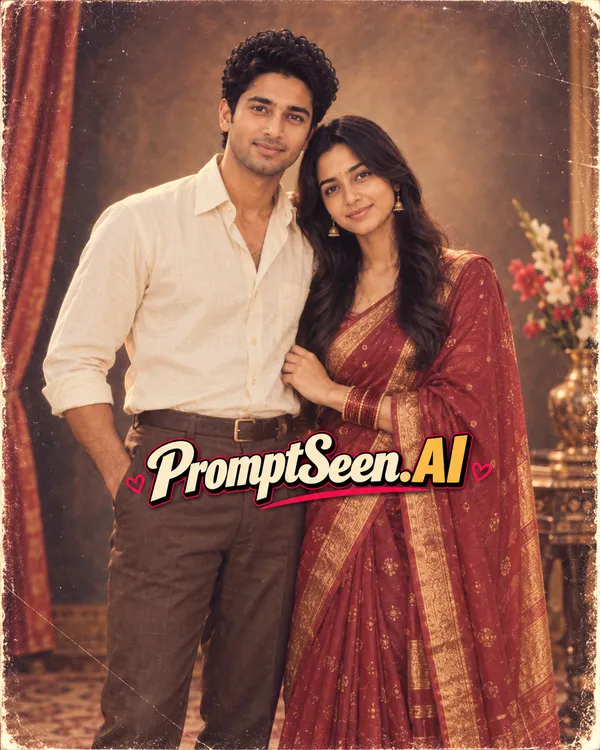
A maroon saree with a gold border, a cream shirt with brown trousers and a beige studio backdrop. This 80s couple photo prompt recreates the kind of portrait couples took a few weeks after their wedding, and the same people-count rule applies: two people in, two people out.
Use the provided reference photo as the exact identity and composition reference. Transform the couple into an authentic 1980s Indian romantic couple portrait, while preserving both people’s original faces and identities exactly as they appear in the reference photo.
CRITICAL PEOPLE COUNT RULE: Show exactly the same two people present in the reference photo. Do not add, remove, duplicate, replace, merge, or invent any person. No extra people in the background, reflections, mirrors, windows, or doorway.
Preserve both individuals’ exact facial identity, face shape, eyes, nose, lips, jawline, natural skin texture, age, and recognizable facial characteristics. Do not beautify, reshape, swap, or replace their faces.
Give the couple authentic 1980s Indian fashion. The woman wears a graceful deep red or maroon saree with a golden border, classic blouse, traditional gold earrings, necklace, and bangles. The man wears a cream or beige shirt with high-waisted dark brown trousers, classic 1980s styling, and neatly styled period-appropriate hair.
Place them in a romantic retro 1980s studio setting with a warm beige textured backdrop, vintage curtains, subtle floral decoration, and classic studio-portrait aesthetics. Keep the couple’s natural relationship and body positioning believable and affectionate without changing their identities.
Use soft romantic studio lighting, warm highlights, gentle shadows, natural skin tones, shallow depth of field, subtle Kodak-style color rendering, authentic 35mm analog film grain, slight film softness, mild color fading, and realistic vintage photographic imperfections.
Avoid modern clothing, smartphones, contemporary backgrounds, modern furniture, digital-looking effects, excessive skin smoothing, or artificial facial changes.
The final image should look like a genuine romantic couple photograph captured in an Indian photography studio during the 1980s, with authentic period fashion, warm emotional atmosphere, realistic textures, and both original faces remaining clearly recognizable.
7. 80s Bollywood Disco Night Style
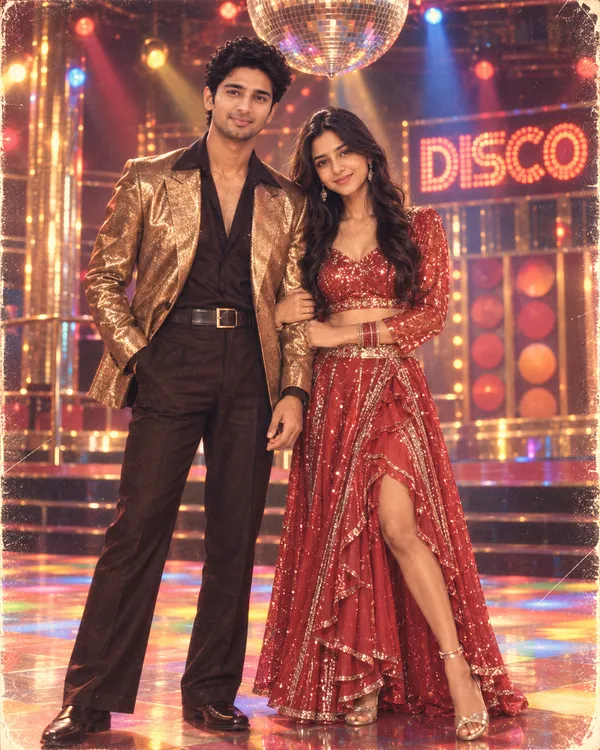
Mirror ball, coloured spotlights, metallic gold and electric blue outfits. This 80s nostalgia prompt goes full Bollywood party mode while still asking for analog film texture, so the picture feels like a real snapshot from a disco night rather than a modern club photo.
Use the provided reference photo as the exact identity and composition reference. Transform the person into an authentic 1980s Bollywood disco-night scene, while preserving their original face and identity exactly as shown in the reference photo.
CRITICAL PEOPLE COUNT RULE: Keep exactly the same number of people visible in the reference photo. Do not add, remove, duplicate, replace, merge, or invent any person. No extra people in the background, reflections, mirrors, or shadows. Every visible person must correspond to someone already present in the reference image.
Preserve the person’s exact facial identity, face shape, eyes, nose, lips, jawline, natural skin texture, age, and recognizable facial features. Do not reshape, swap, replace, or excessively beautify the face.
Dress the person in authentic 1980s Bollywood disco fashion. Use a glamorous retro outfit with metallic gold, silver, red, or electric blue accents, classic 80s hairstyle, period-appropriate accessories, and stylish vintage footwear. Keep the clothing authentic to the era rather than modern nightclub fashion.
Create a vibrant 1980s disco dance-floor atmosphere featuring a classic mirrored disco ball, colorful rotating spotlights, glowing reflections on the floor, retro stage lighting, geometric patterns, and a glamorous Bollywood party ambience. Keep the environment visually rich but realistic.
Use soft cinematic lighting mixed with colorful disco reflections, warm highlights, realistic shadows, natural skin tones, subtle 35mm analog film grain, Kodak-style vintage color rendering, gentle film softness, slight color fading, realistic lens characteristics, and authentic 1980s photographic texture.
The final image should look like a real photograph from a glamorous 1980s Bollywood disco night, captured on analog film—not a modern digital nightclub photograph. Maintain realistic anatomy, natural facial details, authentic clothing textures, believable lighting reflections, and unmistakable classic 80s Bollywood atmosphere.
8. 80s Doordarshan Era Living Room Style
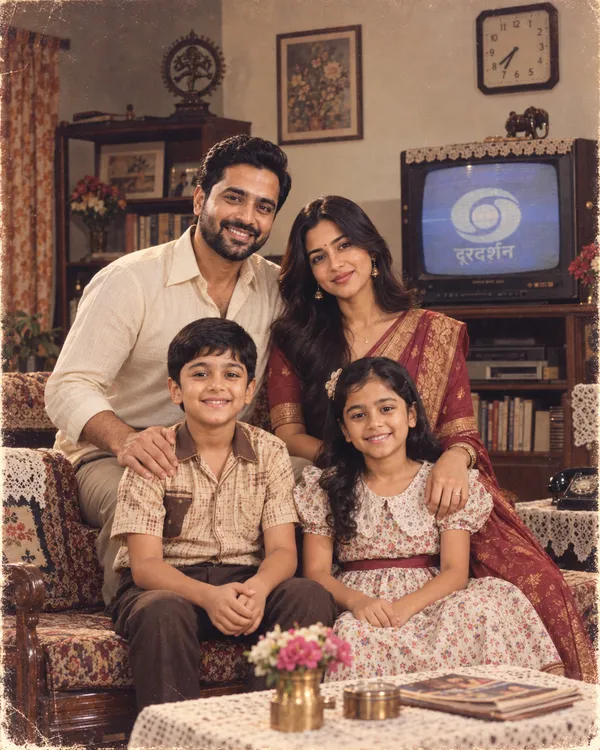
A wooden TV cabinet with a CRT screen, lace table covers, a wall clock and warm tungsten light. This is the living room half of India grew up in, and this 80s vintage photo prompt places your family inside it, dressed in the era’s cream, mustard and maroon.
Use the provided reference photo as the exact identity, people-count, and composition reference. Transform the scene into an authentic 1980s Indian Doordarshan-era living room, while keeping the original people recognizable and naturally integrated into the period setting.
CRITICAL PEOPLE COUNT RULE: Show exactly the same number of people present in the reference photo. Do not add, remove, duplicate, replace, merge, or invent any person. No extra people in the background, television reflection, mirrors, windows, or doorway. Every visible person must be one of the people already present in the reference image.
Preserve every person’s exact facial identity, face shape, eyes, nose, lips, jawline, natural skin texture, age, and recognizable facial characteristics. Do not swap faces, reshape facial features, or artificially beautify the faces.
Dress everyone in authentic 1980s Indian clothing, appropriate to their original gender and age. Use period-accurate sarees, simple shirts, trousers, traditional clothing, classic hairstyles, and modest vintage accessories. Use warm colors such as cream, mustard, maroon, bottle green, beige, and brown.
Set the scene inside a realistic 1980s Indian middle-class living room featuring a large wooden television cabinet with an old CRT television, wooden sofa or vintage upholstered furniture, patterned curtains, lace table covers, a simple wall clock, indoor plants, traditional decorative items, and a few authentic household objects from the era. The television should have a subtle Doordarshan-era broadcast appearance on its screen, without modern flat-screen technology.
Create a warm, nostalgic family atmosphere with everyone naturally seated or standing as appropriate to the original composition. The room should feel lived-in and authentic rather than like a modern recreation.
Use warm tungsten indoor lighting, gentle shadows, realistic skin tones, subtle Kodak-style color rendering, soft 35mm analog film grain, mild film softness, slightly faded colors, realistic lens characteristics, and authentic vintage family-photograph texture.
Strictly exclude modern objects: no smartphones, LED TVs, modern furniture, laptops, contemporary appliances, modern clothing, or modern decorations.
The final image should look like a genuine Indian family photograph captured inside an ordinary 1980s Doordarshan-era home, with authentic period furniture, television, clothing, lighting, and atmosphere. Preserve the original people, their identities, and the exact people count from the reference photo.
9. 80s Indian Railway Station Style
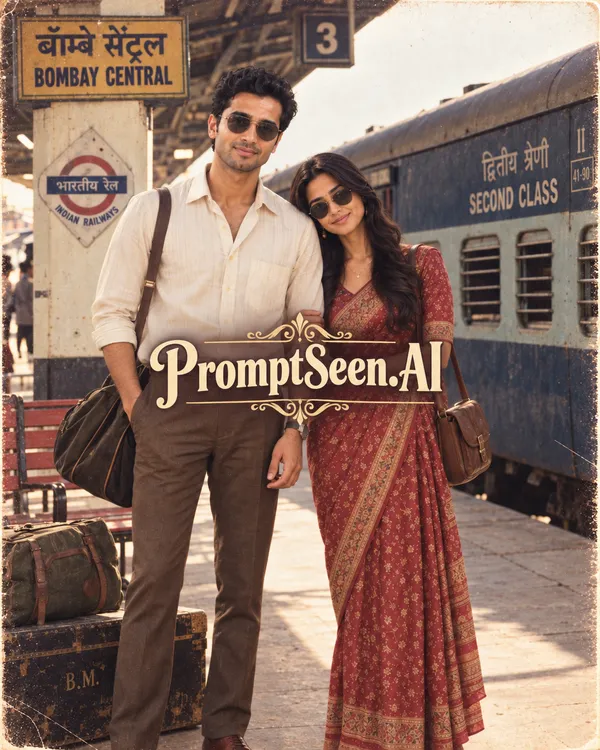
Old Indian Railways coaches, metal benches, tin trunks and a goodbye on the platform. This 80s retro photo prompt builds a cinematic railway moment around your photo with warm daylight and fine film grain.
Use the provided reference photo as the exact identity, people-count, and composition reference. Transform the scene into an authentic 1980s Indian railway station photograph, while preserving every person’s original identity and recognizable appearance.
CRITICAL PEOPLE COUNT RULE: Show exactly the same number of people present in the reference photo. Do not add, remove, duplicate, replace, merge, or invent any person. No extra people anywhere in the scene, including the railway platform background, train windows, reflections, mirrors, doorways, or distant areas. Every visible person must correspond to someone already present in the reference photo.
Preserve each person’s exact facial identity, natural face shape, eyes, nose, lips, jawline, skin texture, age, hairstyle-compatible facial details, and recognizable features. Do not swap, reshape, replace, or excessively beautify any face.
Dress the people in authentic 1980s Indian period clothing. Use classic sarees, simple cotton shirts, high-waisted trousers, traditional Indian outfits, vintage hairstyles, modest accessories, and period-appropriate footwear. Use natural retro colors such as cream, beige, mustard, maroon, bottle green, brown, and faded blue.
Place the scene on an authentic 1980s Indian railway platform, featuring an old Indian Railways passenger train with period-appropriate coaches, vintage railway signs, metal benches, old station lamps, wooden or metal luggage trunks, canvas travel bags, classic suitcases, railway porters’ equipment, and realistic platform details. Include vintage railway architecture and signage appropriate to the era.
Create a natural cinematic moment such as waiting beside the train, standing with luggage, preparing to board, or saying goodbye, while keeping the original pose and composition recognizable from the reference photo.
Use cinematic 35mm analog film photography, warm natural daylight mixed with subtle station lighting, realistic shadows, authentic skin tones, gentle film softness, Kodak-style vintage color rendering, fine film grain, slightly faded colors, realistic lens characteristics, and authentic photographic imperfections.
Strictly exclude modern elements: no smartphones, modern trains, LED screens, modern suitcases, contemporary clothing, modern station architecture, digital signs, or modern vehicles.
The final image should look like a genuine 1980s Indian railway photograph captured on 35mm film, with authentic period clothing, vintage train, luggage, station details, natural expressions, and cinematic nostalgic atmosphere. Keep every original person clearly recognizable and maintain the exact number of people from the reference photo.
10. 80s Indian Village Life Style
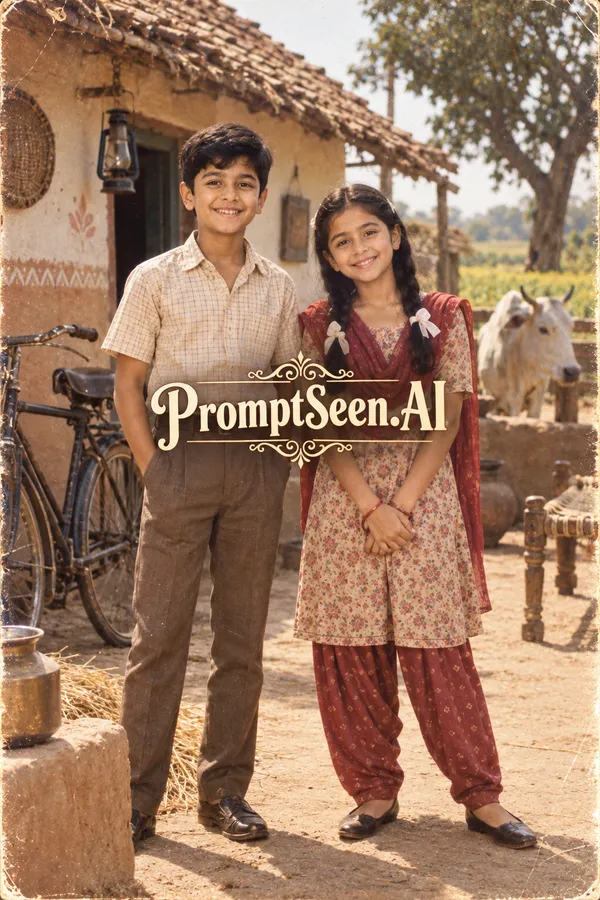
Mud-plastered walls, a charpai in the courtyard, clay pots and an old bicycle leaning against the door. This one captures 80s Indian nostalgia at its most peaceful, with earthy colours and soft morning light.
Use the provided reference photo as the exact identity, people-count, and composition reference. Transform the scene into an authentic 1980s rural Indian village setting, while keeping every person from the reference photo clearly recognizable.
CRITICAL PEOPLE COUNT RULE: Show exactly the same number of people present in the reference photo. Do not add, remove, duplicate, replace, merge, or invent any person. No extra people anywhere in the image, including the background, fields, doorways, windows, reflections, or distant areas. Every visible person must be one of the people already present in the reference photo.
Preserve each person’s exact facial identity, natural face shape, eyes, nose, lips, jawline, skin texture, age, and recognizable facial features. Do not swap, reshape, replace, or excessively beautify any face.
Dress the people in authentic 1980s rural Indian clothing appropriate to their original age and gender. Use traditional cotton sarees, simple dhotis, kurtas, shirts, salwar suits, and period-appropriate footwear. Use earthy and natural colors such as cream, mustard yellow, faded red, bottle green, beige, brown, and light blue.
Set the scene in a peaceful 1980s Indian village, featuring a traditional mud-plastered house with a tiled or thatched roof, earthen courtyard, clay pots, charpai, wooden doors, agricultural fields, trees, simple rural household objects, and an authentic old-style bicycle. Keep the environment realistic and naturally lived-in, without modern construction or objects.
Create a relaxed, natural pose based on the original reference composition. The people should appear to be enjoying an ordinary moment of village life, with genuine expressions and natural body proportions.
Use natural vintage film photography, soft morning or late-afternoon sunlight, warm earthy tones, realistic shadows, subtle Kodak-style color rendering, fine 35mm analog film grain, gentle film softness, slightly faded colors, realistic lens characteristics, and authentic photographic imperfections.
Strictly exclude modern elements: no smartphones, motorcycles, modern cars, concrete modern buildings, LED lights, modern clothing, plastic-heavy interiors, contemporary furniture, or digital-looking effects.
The final image should look like a genuine 1980s Indian village photograph captured on an analog 35mm camera, with authentic rural clothing, mud house, bicycle, agricultural surroundings, natural lighting, and nostalgic period atmosphere. Keep the original people, their identities, poses, and exact people count consistent with the reference photo.
Scroll through Instagram or a few WhatsApp status updates this week and you will spot it everywhere: friends turned into 1980s Bollywood stars, parents recreated in old studio portraits, couples standing on a railway platform that looks straight out of a Doordarshan serial. The 80s 90s trend has become the favourite way to play with AI photo tools, and the 1980s half of it is the one people keep coming back to, which is why a good 80s trend prompt is worth saving.
That is what this page is for. Below you will find ten ready-to-use 80s trend photo prompt templates from Prompt Seen, each written for Gemini and ChatGPT. Copy a prompt, upload your photo, and the AI rebuilds you inside a scene from 1980s India while keeping your real face intact.
Every template follows the same rule: your identity stays locked and only the era changes. Each 80s photo prompt below comes with a vertical sample thumbnail, so you know what to expect before you press generate.
The 80s 90s trend looks convincing only when the small details line up. Whether you use a template above or write your own 80s photo editing prompt, these are the elements worth asking for:
Film grain: ask for fine 35mm analog grain and gentle softness. Sharp, noise-free output is the fastest giveaway of a modern render.
Vintage colours: warm Kodak-style tones, slightly faded highlights and colours like mustard, maroon, bottle green and cream do more for the era than any single outfit.
Old-camera look: soft focus, mild lens flare, shallow depth of field and a little light leak make an 80s AI photo prompt feel like a real print instead of a digital image.
Retro clothing: feathered hair, high-waisted trousers, silk sarees with gold borders and antique-gold jewellery anchor the person in the decade.
Nostalgic backgrounds: a studio backdrop, a Doordarshan-era living room, a railway platform or a village courtyard gives the AI a setting to build the story around.
Start with one 80s retro prompt, check the result, then adjust a single element at a time. That is how the best pictures on this page were made.
12. FAQ – 80s Trend Prompts
What is an 80s trend prompt?
It is a written instruction that tells Gemini or ChatGPT to redraw your photo as if it were taken in 1980s India, with the clothing, hairstyles, lighting and film texture of that decade. It is the 1980s side of the wider 80s 90s trend you see on Instagram and WhatsApp.
Will these prompts change my face?
No. Every 80s photo prompt on this page opens with an identity-preservation instruction that asks the AI to keep your face shape, eyes, nose, lips, jawline and skin texture untouched. Prompt Seen writes the templates this way so the finished picture still looks like you.
Which AI tool works best for these prompts?
Gemini and ChatGPT both handle an 80s AI photo prompt well. Upload your photo first, paste the 80s trend photo prompt underneath, and let the tool generate.
Why do the prompts mention 35mm film and Kodak colours?
Because that is what makes the result believable. An 80s retro prompt needs grain, softer contrast and slightly faded colours to look like a print from that era. Without those lines, an 80s AI photo prompt tends to produce a clean modern photo with a filter on top.
Can I use these prompts for group or family photos?
Yes. The family album, couple, Doordarshan, railway and village templates include a strict people-count rule so no one is added or removed. For any 80s photo prompt used with a group, upload a photo where every face is clearly visible.
Are these templates free to use?
Yes. Every 80s trend prompt from Prompt Seen is free to copy, share and use in any AI image generator.
What kind of photo should I upload?
An 80s trend photo prompt works best with a sharp, well-lit photo where the face is not covered by sunglasses, a cap or heavy filters.
Can I change parts of a prompt?
Yes. Swap the saree colour, the car or the backdrop to suit your photo, but keep the identity and people-count lines as they are. Treat each 80s retro prompt as a starting point rather than a fixed script.